Riding a camel into the dunes is the classic, almost ceremonial way to reach a Sahara camp, and for many travelers it is the highlight of a trip to Morocco's southeast. The animals are dromedaries, the one-humped camels long used by Berber and nomad caravans to cross this terrain.
The most common version is short and gentle: a roughly one to one-and-a-half hour ride from the edge of the sand into a desert camp, timed so you arrive as the dunes glow at sunset. From there you can scale up to multi-day caravans that move camp to camp through the deep desert. This guide covers what the ride actually feels like, how long to go for, where to do it, what to wear and bring, who it suits, and how to choose an operator that treats its animals well.
Key facts
- The animal
- A one-humped dromedary, traditionally used by Berber and nomad caravans to cross the desert.
- Typical short ride
- About 1–1.5 hours from the dune edge into camp, usually timed for sunset.
- Trip range
- From a single sunset ride to multi-day, camp-to-camp caravans of three nights or more.
- Where to go
- Erg Chebbi (Merzouga) for easy access; Erg Chigaga (M'hamid) for remote, quiet dunes.
- Best riding times
- Sunrise and sunset, for soft light and cooler temperatures.
- Key item to pack
- A scarf or cheche for sun and blowing sand, plus layers, closed shoes and water.
What a camel trek is actually like
You usually meet your dromedaries at the edge of the dunes, where they are roped together nose-to-tail in a small caravan and made to kneel. You mount while the animal is sitting: settle into the saddle, hold the pommel firmly with both hands, and lean back as it stands, because it rises back legs first and lurches forward, then back. Dismounting is the same in reverse, and most people find getting off easier than getting on.
Once moving, the dromedary walks at a slow, swaying pace, its legs on each side stepping together in a rolling, two-beat rhythm. The trick is to relax and sway with it rather than tense up. A handler leads the caravan on foot, so you are not steering; you simply settle in, watch the dunes drift past, and let the silence take over.
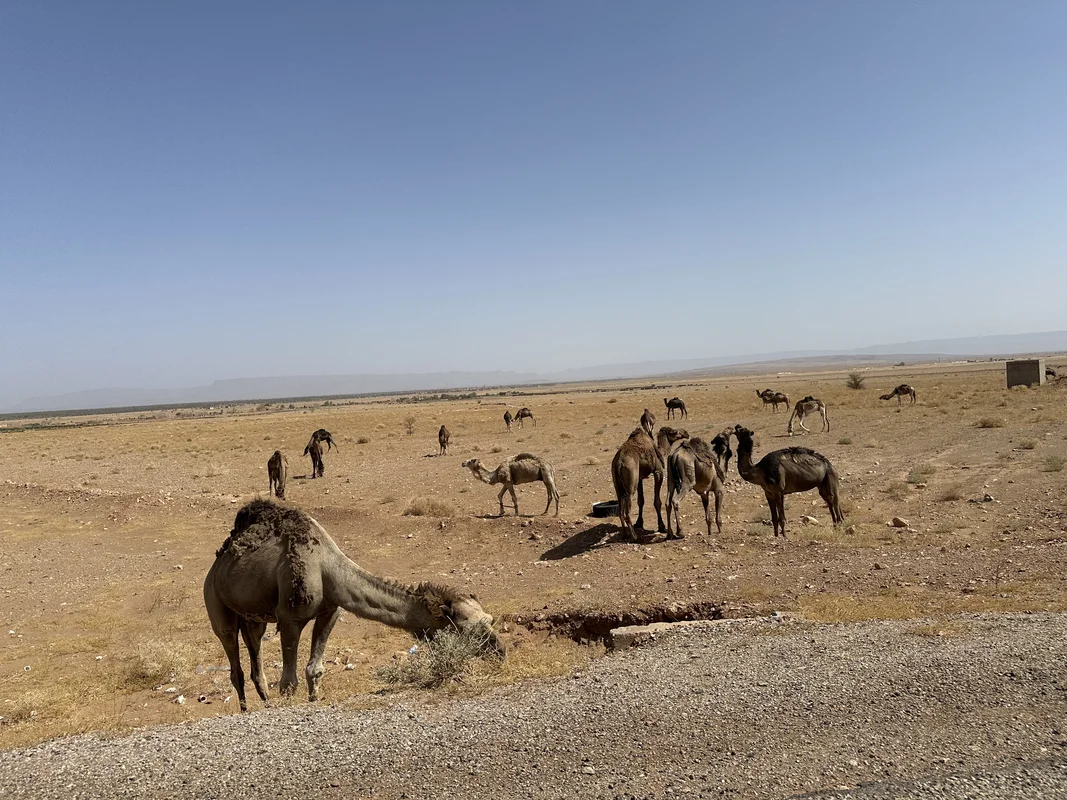
How long to go for: sunset ride to multi-day caravan
Trek length is the first decision, and there is a clear spectrum:
- Short sunset or sunrise ride (about 1–1.5 hours): the standard option, riding from the dune edge into camp for the night and out again the next morning. Enough to feel the magic without testing your stamina.
- One to two nights: the sweet spot for most visitors, combining the ride with an overnight in a desert camp, dinner under the stars, and a sunrise return.
- Multi-day caravans (three nights or more): a deeper expedition that moves between remote camps, mixing time in the saddle with walking. These reward travelers who want real solitude and immersion.
On longer treks you typically ride for stretches and walk for others, both to rest yourself and to spare the animals.
Where to trek: Erg Chebbi vs Erg Chigaga
The two great dune seas of the southeast offer different experiences. Erg Chebbi, reached from Merzouga, is the more accessible and popular choice: paved road runs right to the sand, camps sit close to the dune edge, and short rides into camp are the norm. It is ideal for first-timers and tight itineraries, though you will share the dunes with other groups.
Erg Chigaga, beyond M'hamid in the Draa Valley, is larger, remoter and far quieter. The road ends short of the dunes, so you finish by 4x4 or on camel, and treks here tend to be longer and more immersive. Choose Erg Chigaga for genuine wilderness and dazzling, light-pollution-free skies; choose Erg Chebbi for ease and convenience.
What to wear and bring
Dress for sun, sand and a wide day-to-night temperature swing. Layers of light, breathable, covering clothing work best: long sleeves and long trousers protect against sun and chafing far better than shorts. Add a warm layer for after dark, as desert evenings cool quickly.
- A scarf or cheche wrapped around your head and face is the single most useful item; it shields you from sun and keeps blown sand out of your nose and mouth. Handlers will often help you tie one, and they are easy to buy locally.
- Closed shoes for stability mounting and dismounting and to keep hot sand out.
- Sunglasses, a hat and sunscreen against the strong glare.
- Water, a small daypack, and a headlamp for camp; lip balm and a power bank help too.
Comfort, difficulty and who it suits
A camel trek takes no special skill, and the short sunset ride suits most reasonably mobile travelers, including families with older children. You sit high up and the gait is rolling rather than fast, so the main challenge is simply the unfamiliar swaying motion and gripping with muscles you rarely use.
Expect some soreness, especially in the legs and lower back, after longer rides; a day or two of stiffness is normal. To ease it, relax into the rhythm instead of fighting it, shift your weight occasionally, and break up long stretches by walking. People with significant back, hip or balance problems, or anyone who is pregnant, should weigh the jolting motion carefully and consider reaching camp by 4x4 instead. There is no shame in a shorter ride.
Best times of day and the experience of silence
The two magic windows are sunset and sunrise, and most treks are timed around them. Riding out in late afternoon, you reach camp as low light turns the dunes gold and orange; an optional early ride the next morning catches the cool, soft light of dawn. These hours are also kinder than the harsh midday heat and glare.
What stays with most people, though, is the silence. Once the caravan is out among the dunes, away from engines and crowds, the desert falls almost completely quiet, broken only by the soft thud of padded feet on sand. At night the lack of light pollution opens up an extraordinary sky. Pick a season that matches this: see our guide to the best time to visit the Sahara.
Animal welfare, choosing an operator and safety
The dromedaries make the trek possible, and responsible travelers should ride only with operators who clearly look after them. As general good practice, choose operators with strong reviews and observe the animals before you commit: they should look healthy and well-fed, not thin, sore or lame, and should not be overloaded or made to carry too many or too-heavy riders. Reasonable group sizes and unhurried, calm handling are good signs. If a handler is rough with an animal, it is fair to speak up politely.
For safety, hold the saddle firmly during the stand-up and sit-down, follow your guide's instructions, and keep children supervised. Carry enough water, protect yourself from the sun, and let your operator know of any health concerns before you ride.