Tinghir is a sprawling oasis town strung along the Todgha river in Morocco's Drâa-Tafilalet region, where a long ribbon of date palms runs bright green against bare, ochre hills. Sitting roughly midway between Ouarzazate and Errachidia on the so-called road of a thousand kasbahs, it is the main town and base for travellers heading to the Todra Gorge, about 15 km to the north.
At around 1,300 metres of altitude, Tinghir spreads across the valley floor below a hillside of old kasbahs and ksour built in red and ochre pisé (rammed earth). Below them, one of southeastern Morocco's largest and most luxuriant palm groves shelters small fields, gardens and footpaths fed by centuries-old irrigation channels. Most visitors pause here to walk the palmeraie, take in the views and use the town as a launch point for the gorge.
Key facts
- Location
- Oasis town on the Todgha river in the Drâa-Tafilalet region, between Ouarzazate and Errachidia.
- Altitude
- Around 1,300 metres above sea level.
- Todra Gorge
- About 15 km north up the Todgha valley; Tinghir is the main base for visiting it.
- Oasis
- One of southeastern Morocco's largest and lushest palm groves, lined with date palms and small farms.
- Heritage
- Old kasbahs and ksour in rammed earth, plus a former mellah (Jewish quarter).
- On the route
- A stop on the road of a thousand kasbahs linking Ouarzazate to the desert.
An oasis on the Todgha river
Tinghir grew up where the Todgha river emerges from the mountains and slows across the valley floor, allowing water to be spread through the fields. The result is one of the longest and lushest oases in southeastern Morocco, a band of date palms that follows the watercourse for many kilometres while the surrounding country stays stony and dry.
The contrast is the whole appeal: from the upper town and the old kasbahs you look down on an unbroken canopy of palms, with the river threading through it and the mountains rising behind. Beneath the tall palms, farmers cultivate a second and third storey of fruit trees, fodder and vegetables, an ancient layered system that makes the most of the shade and water. A slow walk along the irrigation paths is the classic Tinghir experience.
Gateway to the Todra Gorge
Tinghir's best-known role is as the base for the Todra Gorge, which lies roughly 15 km north up the Todgha valley. The road from town runs through the palm grove and villages before the cliffs close in, so the journey itself is part of the visit.
At the gorge, sheer limestone walls hundreds of metres high narrow to a dramatic slot where the river and the road squeeze through together. Many travellers stay in or near Tinghir and make the gorge a half-day or day trip, combining it with a walk in the palmeraie. The town is also a common overnight stop on longer itineraries linking the Dades Gorge to the west with Erfoud and the desert to the east.
Old kasbahs, ksour and the former mellah
Above the modern town, the older quarters climb the hillside in fortified ksour and kasbahs of rammed earth, their walls and towers fading from ochre to dusty pink. Wandering the lanes here gives a sense of how the oasis was traditionally organised, with dwellings clustered for defence and shade above the precious farmland below.
Tinghir also preserves a former mellah, the old Jewish quarter, a reminder of the mixed Berber, Arab and Jewish communities that once lived side by side in southern Morocco's oases. The quarter's narrow passages and tall earthen houses are part of the town's layered heritage, though much of the historic fabric is fragile and weathered. Together these districts make the upper town as interesting as the palmeraie itself.
Oasis agriculture and irrigation
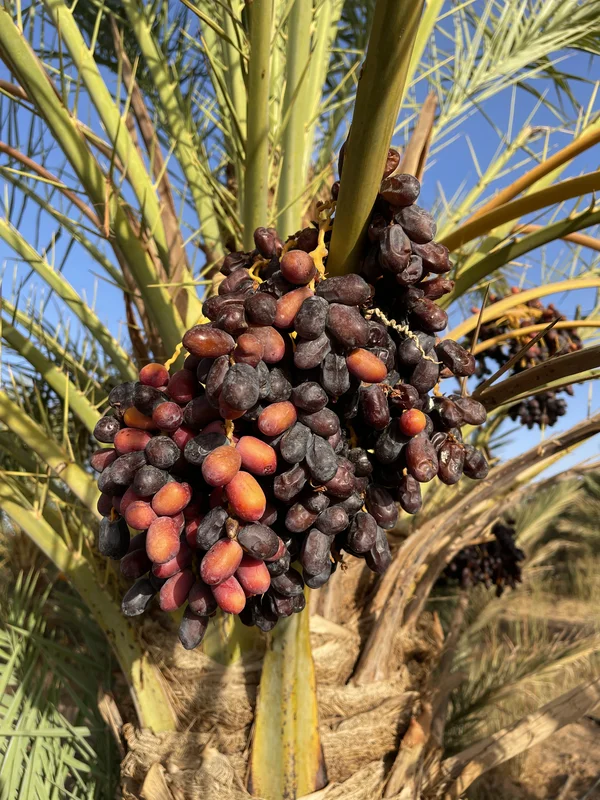
The Tinghir oasis is a working agricultural landscape, not just scenery. Date palms are the signature crop, alongside almonds, fruit trees, cereals and vegetables grown in small plots between the trees. The whole system depends on carefully managing the Todgha river's water and dividing it among many family holdings.
Water is led through a network of channels and, in the wider region, underground galleries traditionally known as khettaras that carry water with minimal evaporation. Fields are often terraced and irrigated in turn according to long-established rights. Seeing this up close, with farmers tending plots in the shade of the palms, is one of the most rewarding reasons to slow down in Tinghir rather than just passing through.
On the road of a thousand kasbahs
Tinghir sits on the route popularly called the road of a thousand kasbahs, the chain of oases and fortified villages that follows the southern edge of the Atlas between Ouarzazate and the southeast. Travelling this road, the pattern repeats: a green palm oasis, a cluster of earthen kasbahs, then dry country, then the next oasis.
Because of its position roughly midway along the route, Tinghir is a natural stopping point. To the west the road passes the Dades Gorge and Skoura's kasbahs; to the east it continues toward Erfoud, Rissani and the dunes of Merzouga. This makes the town a convenient hinge in many Morocco desert itineraries.
What travellers do in Tinghir
Most visits centre on the oasis and the gorge. Popular things to do include:
- Walking or cycling the footpaths through the palm grove, among gardens and irrigation channels.
- Climbing to a viewpoint over the palmeraie for the panorama of green oasis against bare hills.
- Exploring the old kasbah quarters and the former mellah on the hillside above town.
- Taking a half-day or day trip to the Todra Gorge, about 15 km north.
- Using Tinghir as an overnight base when travelling between the Dades valley and the desert.
A local guide can add useful context on the irrigation system, the date harvest and the history of the ksour.